Showing posts with label Frank Lorenzo. Show all posts

22 April 2015

Texas International's Peanuts Fares and the Rise of Frank Lorenzo

Houston-based Texas International Airlines began in 1944 as Aviation Enterprises and in 1947 with a fleet of surplus Douglas DC-3s, renamed itself Trans-Texas Airways. As Trans-Texas grew as a local service carrier (what we would today call a regional airline only without the affiliation to a major airline like today), Trans-Texas expanded services beyond the state as it added Convair 240 piston twins. The Convairs were later re-engined with Rolls Royce Dart turboprops to become Convair 600s. By the start of the Sixties, the airline flew as far west as Albuquerque and El Paso and Memphis, Jackson, and New Orleans in the east. To maintain its competitive edge with the other Texas-based airline of the day, Braniff International, Trans-Texas added the Douglas DC-9 Series 10 to its fleet starting in 1967. Route expansion continued steadily and with the addition of a small handful of destinations in northern Mexico, the airline re-branded as Texas International in 1970, later unveiling a patriotic Lone Star livery in 1973 prior to the opening of the new DFW Airport. Unfortunately, Texas International's upgrades to jet equipment had saddled the airline with quite a bit of debt, not unlike what had happened to Mohawk Airlines just a few years earlier. Through the 1960s, Texas International and its larger rival Dallas-based Braniff International had more or less comfortably existed in a duopoly in the Texas airline market. That secure operating climate was upended in 1971 with the arrival of Southwest Airlines. Texas International had joined Braniff in the legal battle to quash the nascent upstart and lost, putting Texas International in the new position of having to compete to a degree it had not had to in its history. Combined with its mounting debts from the expansion in the 1960s and the upgrade to a jet fleet, the Houston-based operation was in need of help. 
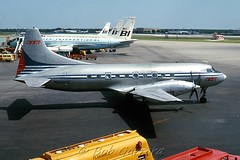
N94205 TTA Trans-Texas Airways
Trans-Texas Airways (TTa) Convair 600 at Dallas Love Field

I had posted previously how in a similar financial situation, New York-based Mohawk Airlines had turned to the services of a small consulting firm called Jet Capital that was headed by a young and quite brash individual named Frank Lorenzo. Lorenzo and his primary business partner, Bob Carney, a fellow Harvard Business School classmate, had become a bit of an upstart darling on Wall Street for their financial wizardry in creating Jet Capital. In their stock offering, Lorenzo and Carney sold shares to the public at 10 cents each, but before the IPO for Jet Capital, they sold shares to friends at $3.50 each but more importantly, they sold shares to each other for 12 cents each. Investing only $44,000 of their money, the Jet Capital IPO netted them $1.5 million yet they controlled 75% of Jet Capital's shares. It was that seed money that Lorenzo used in his failed bid to takeover Mohawk Airlines. At the time of his Mohawk venture, Lorenzo had made friends with Don Burr, a mutual fund manager that had made a name for himself on Wall Street with some very astute aviation stock picks. With his clout as a mutual fund manager that held shares in Texas International, Burr convinced the airline to engage the consulting services of Jet Capital to effect a turnaround. Lorenzo arranged to have the airline's debt refinanced with Burr offering the injection of $5 million from his mutual fund. The result, of course, like their proposed Mohawk deal, was to take control of the airline, and like the Mohawk board several years earlier, the Texas International board was suspicious of Lorenzo and they might have scrapped the deal had it not been for two individuals that entered the ring to try to acquire Texas International themselves- Howard Hughes and Herb Kelleher. 

Ever since Hughes relinquished control of TWA in the late 1960s, he had been craving to get back into the airline business and got that chance with his acquisition of the local service carrier AirWest in 1970, immediately rebranding the airline has Hughes Airwest. But Hughes wanted something on the scope of TWA and his new airline only gave him the West Coast. Acquiring Texas International would get him 2/3 of the way across the country on his goal of recreating a transcontinental airline. For Herb Kelleher, getting Texas International would not only knock out a competitor who only recently tried to put Southwest out of business through legal action, it would also give Southwest the operating certificate of Texas International which permitted flights beyond the states of Texas, something Southwest wasn't able to do at the time. Faced with someone known to be eccentric and someone who they felt was bent on revenge for their failed bid to quash Southwest, the Texas International board sold the airline to Lorenzo in 1972. Like his structuring of Jet Capital, even though he controlled only 24% of the shares in Texas International, Lorenzo structured the deal to give him majority voting control of the airline. At only 32 years of age, Frank Lorenzo became the youngest airline chief since Juan Trippe at Pan Am. And he did it by defeating Herb Kelleher *and* Howard Hughes. Who wouldn't be on top of the world in those shoes?

Frank Lorenzo at the time he took control of Texas International
Don Burr left Wall Street in 1973 to work with Lorenzo in Houston running Texas International. At the time Southwest was adding its fifth and sixth Boeing 737-200 to its nascent fleet and even though Texas International had routes outside of the state of Texas, it was beginning to lose market share within Texas to Herb Kelleher's operation. It was at Texas International that Lorenzo began to earn his reputation as a union-buster- in order to better compete against Southwest, Lorenzo began making deep cuts in labor costs that sowed discord among the employees at Texas International. With labor contracts up for negotiation, the atmosphere became contentious at Texas International. In a pattern that set Lorenzo's pattern for negotiations with both unions and investors, he would often add or change at the last minute agreed-upon terms for the contract. This angered the unions at Texas International and they struck, the very first strike in the history of the small airline. The airline was grounded for four months, but back then in the days before deregulation, there was a mutual aid pact in place where other airlines gave financial support to airlines that were grounded by labor actions. As a result (and much to the other airline's chagrin who felt Lorenzo could have prevented the strike), Texas International got millions under the pact and the strike eventually ended. 
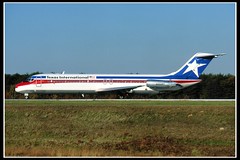
N3508T Texas International Airlines
Texas International Douglas DC-9 Series 30, the airline's largest aircraft

Having got his labor concessions the way he wanted, Lorenzo could now turn his attention to competing with Southwest. At the time, Southwest operated within the "Texas Triangle" of Dallas, Houston, and San Antonio, the state's three largest cities. Kelleher had engaged the services of a seasoned airline executive, Lamar Muse, to guide Southwest's growth. Muse picked the agricultural town of Harlingen in the Rio Grande Valley as Southwest's next destination. The city was ripe for the picking- being at least a seven hour drive from the nearest large city, Harlingen was dependent upon air services from Texas International and the four month strike at the airline had hurt the city economically. Muse had also astutely noted that Harlingen was a short drive from South Padre Island which was at the cusp of starting its tourist boom as a Gulf Coast beach destination. While Texas International would have charged a one way fare of $40 for Harlingen, Southwest charged only $25 and traffic soon boomed with thousands of passengers filling Southwest flights whereas the year prior, Texas International would have only had a few hundred a month. Before long, residents from northern Mexico were crossing the border to also take Southwest flights. Texas International tried various approaches, but it was painfully clear to Lorenzo that he wasn't able to compete head-to-head with Southwest. 

In the days before deregulation, airline fares were set by the Civil Aeronautics Board (CAB) in Washington. Any airline that operated beyond a single state was an interstate carrier and would fall under CAB regulation as was the case with Texas International. Southwest, however, only operated in Texas and therefore was free to set its fares whatever it wished as long as the state authorities in Austin had no objections, which was rarely the case. In November 1976, Lorenzo petitioned the CAB to be allowed to cut its fares- and not just to match Southwest, but to undercut Southwest with a 50% discount- what Lorenzo called "Peanuts Fares" since you could "fly for peanuts". For years airlines had been allowed to implement fare discounts by the CAB, but these were usually for charter flights, holiday flights and red-eye flights and were rarely ever long-term and only applied to a few flights. What Lorenzo was petitioning the CAB to be allowed to do was unprecedented in the airline industry- he was asking for individual authority to set his own ticket prices across the board based on market conditions. This had never been done in forty years, but there were already deregulation forces at work in Washington on the heels of Jimmy Carter's election to the White House. The CAB approved Lorenzo's petition and the Peanuts Fare" were introduced not just to Harlingen, but across Texas International's route system. By the end of the first week, passenger loads on the airline had shot up an astounding 600 percent. 

Peanuts Fares didn't just apply to routes where TI competed with Southwest
Peanuts Fares were a success for the airline and Frank Lorenzo was hailed as a hero by consumer advocate groups. But there was a catch that gnawed at him despite being flush with success at such a young age with such a small airline- the fare experiment suggested strongly that airlines were more than able to manage their own fares without the bureaucracy of the CAB. To the advocates of deregulation, it was ammunition in the battle to eliminate the CAB and deregulate the US airline industry. Just a few years earlier an airline executive could face criminal charges for setting fares without the approval of the CAB, now here was Texas International doing just that and making a huge pile of money in the process and stimulating a boom in passenger traffic. Lorenzo didn't want deregulation, though. Texas International at the time was only the 20th largest airline in the United States. He knew he could be crushed instantly by the Dallas-based giant Braniff International should deregulation happen. Even bigger American Airlines was growing its presence at the new DFW Airport as well, and American had resources and deep pockets that would make Texas International a quick snack in a fully free-market environment. During press interviews at the time, Lorenzo was quick to point out the experimental and temporary nature of the Peanuts Fares. For the time being, the CAB's bureaucracy did shelter him from being crushed by larger airlines for the time being, giving him time to plan his next move. 

But that'll be a blog post for a later date..........

Source: Hard Landing: The Epic Contest for Power and Profits That Plunged the Airlines into Chaos by Thomas Petzinger. Times Business/Random House, 1996, pp 38-50. Grounded: Frank Lorenzo and the Destruction of Eastern Airlines by Aaron Bernstein. Beard Books, 1999, pp 11-15 Photos: Wikipedia, Flickr/Bob Garrard Collection


29 March 2015

Flying High This Past Week: 23 March-29 March

Don't forget that the new URL for TAILS THROUGH TIME is now www.tailsthroughtime.com. The old blogspot URL will still work, though. Consider it a quick NOTAM! I suppose a sign you've moved up in the blogosphere is when a Wikipedia article lists one of your articles as a source! It was an Wikipedia entry on the Pratt & Whitney J58 engine that powered the Lockheed SR-71 Blackbird and my blog article on the Mach 3 Phantom proposal is listed as a reference in the sources. This past week was one of the unusual weeks that two articles get posted in a week, so obviously we'll lead off with those two articles on this week's edition of Flying High This Past Week: 
  • The Rise and Fall of Mohawk Airlines and Opening the Door for Frank Lorenzo: Mohawk Airlines began operations in 1944 as Robinson Air Lines, connecting Ithaca, New York, with Teterboro Airport in New Jersey. By 1952 one of the pilots at Robinson eventually took over the airline and renamed it Mohawk following an employee contest for a new name. Mohawk and its new president, Bob Peach, were legendary among local service carriers as they were the first of the second tier of airlines to operate pure jet equipment and it was Peach's determination to operate pure jets that gained him the respect of his peers in the industry. Unfortunately circumstances would doom Mohawk to the point that it had to choose between joining its long time rival, Allegheny Airlines, or a young smooth talking New York businessman whose name became infamous in the US airline industry- Frank Lorenzo. 
  • Proving the Harrier Carrier: The idea of a V/STOL equipped light carrier that is sort of like the modern day equivalent of the light escort carriers of the Second World War had its genesis in the austere budgetary environment that came at the end of the Vietnam War. The Chief of Naval Operations, Admiral Elmo Zumwalt, championed a cheaper alternative to the supercarrier called the Sea Control Ship that would use the new AV-8A Harrier as the sharp point of its spear. While the Navy never went forward with the SCS concept, many of our allies paid close attention and the US Marine Corps in particular would use the experience to base the Harrier and now Harrier II aboard the big deck amphibs of the "Gator Navy".
  • Two's Company and Three's A Crowd: The Boeing 737-200 Flight Crew Controversy: This article from the week before last is still getting plenty of hits. I suppose that we are all looking at the number of crew in the flight deck with a different eye these days in light of the Germanwings tragedy. 
  • Operation Teaball: Network-Centric Real-Time Intelligence in Vietnam: While the tools the US military used to restore the fighting effectiveness of its combat pilots are varied, one of the more interesting tools in the renaissance of the fighter pilot in the skies over Vietnam was the use of real-time intelligence to increase the situational awareness of pilots who were operating in the skies over North Vietnam.
  • The Early Days of Airbus Industrie and How the A300 Got Its Name: I don't know what interests me more- the political machinations of 1960s Europe that led to the formation of Airbus or the fact that the A300 designation sprang out of a light hearted joke. Given the juggernaut that Airbus has become in the world commercial aircraft market, it's beginnings were much less assured and much more tenuous at best. 
  • How American Airlines Shaped the A300: Related to the prior linked article on the early days of Airbus Industrie, even though American Airlines didn't operate the Airbus A300 until April 1988 as the launch customer for the A300-600R variant, one of its VPs, Frank Kolk, back in the 1960s had a tremendous influence in shaping the final design of the A300. The A300 was much closer to Kolk's specification for a widebody twin that he authored in 1967 than the eventual aircraft that sprang from Kolk's requirements, the Douglas DC-10 and the Lockheed L-1011 Tristar. 
  • The Ryan FR-1 Fireball and F2R Dark Shark: An Evolutionary Dead End: Probably the pinnacle of mixed-propulsion fighter aircraft, these two Ryan fighter designs of the Navy represented a rather simple but effective remedy to the shortfalls of jet engines in the immediate postwar era.
Remember that new blog articles are posted every five days. The next article will be going up on April 2nd, so stay tuned. And for those who missed it, this is last week's edition of Flying High This Past Week

28 March 2015

The Rise and Fall of Mohawk Airlines and Opening the Door for Frank Lorenzo

Robinson DC-3 crew with Robert Peach on the far right
In the days following Pearl Harbor, the US Civil Aeronautics Board suspended all awards for new air services given the wartime situation. However, the CAB soon realized that air services would need to expand the support the growing production effort for the war. On 11 July 1944 the CAB issued an judgement that created a new category of airline called a feeder or local service airline that would funnel passengers and goods from smaller communities to larger cities for connections to the large established trunk airlines of the day like the "Big Four" of United, Eastern, American, and TWA. One of the early pioneers to take advantage of the CAB's decision was an aerial photographer and inventor named C.S. Robinson in Ithaca, New York. His work with aerial photography before the war led him to developed a metal spring like shock mount for his cameras that was superior to the rubber mounts of the day that became hard at high altitude. Robinson's factory to support the war effort was in Teterboro, New Jersey and he commuted between Teterboro and Ithaca in his Fairchild 24. Finding a constant stream of people who wanted to hitch a ride with him to New Jersey, he decided to start his own airline to connect upstate New York to the New York/New Jersey area and on 6 April 1945 Robinson Airlines began airline services from Ithaca and New York City using three Fairchild 24s. With traffic growing, Robinson expanded to larger aircraft and hired pilots as fast as he could to meet demand. One of his new hires was a former Navy patrol pilot and lawyer named Robert Peach. 

Peach was decorated Navy pilot in the Pacific with two Distinguished Flying Crosses and at the time he joined Robinson Airlines, he was finishing law school at Cornell and wanted to get back into flying part-time. With the rapid growth of demand out of Ithaca, Robinson's laid back management style wasn't conducive to a growing airline and the finances according suffered in the immediate years after the end of the Second World War. Edwin Link, the developer of the Link Simulator that was vital to training pilots, had a factory in Binghamton, New York and was willing to invest in Robinson if there was a change of leadership to assure a return on his investment. Link provided the seed money to allow Robinson to upgrade to Douglas DC-3s and by 1952 Robert Peach had risen through the ranks to Robinson to gain the attention of outside investors. He ended up buying Robinson Airlines outright which assured Link's continued investment in the airline. One of his first acts as head of the airline was to hold a contest to rename the airline and that's how it became Mohawk Airlines. 

Robert Peach at the christening of Mohawk's first One-Eleven
Link's investments weren't enough for Mohawk as Peach pushed for an increase in the usual subsidy the CAB gave to local service airlines. It was a role that raised Peach's prominence in the airline community as he advocated for more support for the smaller airlines. In those days, the CAB had a subsidy given to airlines for routes they flew and Peach pushed for the CAB to treat local service airlines like Mohawk on the same basis as the large established trunk airlines. At the time the Eisenhower Administration wasn't too keen on the idea of increasing subsidies to local service carriers, but Peach and the other local service carrier heads had two important allies- one was Donald Nyrop, the head of the CAB at the time (who later became the head of Northwest Airlines) and Texas Democrat Representative Lloyd Bentsen. When the CAB opened up for applications for local service carriers in 1945, certification was provisional. Bentsen's proposed legislation would make certification of the local service carriers permanent, placing them on better footing with the established trunk carriers and opening the door to increased subsidies from the CAB. President Eisenhower signed the bill after it was unanimously passed by both houses of Congress in 1955. 

Mohawk's BAC One-Elevens increased its stature in the industry
Beginning 1962 Mohawk under Peach's leadership grew tremendously. I had previously written about Mohawk's fight to acquire jet equipment in the form of the BAC One-Eleven that culminated in Peach winning the fight and the first Mohawk BAC One-Eleven, christened "Ohio" flew its first revenue services on 25 June 1965. In addition, Fairchild-Hiller FH-227 turboprops were also put into service to replace the piston twins with Mohawk reaching its zenith in 1967 with route awards from the CAB to Detroit, Cleveland and Boston. The floor fell out from underneath Robert Peach and Mohawk Airlines in 1968. On 23 June that year, the BAC One-Eleven "Discover America" crashed on a flight from Elmira, New York, to Washington, DC. The cause was a valve failure in the APU that resulted in an inflight fire that compromised the tail structure. Two weeks later, a new air traffic controllers union called Professional Air Traffic Controllers Organization (PATCO) that started in New York City staged a slowdown to protest inadequate staffing and excessive overtime. Working to the letter of the rules, air traffic back up around numerous chokepoints that led into the New York City area. From July to August, the PATCO action proved disastrous to many airlines, but more so to Mohawk given its route structure. Peach even tendered a bill to the FAA for costs incurred during the PATCO slowdown as a protest. In the following year, a general downturn in the economy then hit Mohawk's passenger numbers. By 1970, the nation was in recession and every airline was losing money and this further added to Mohawk's woes. To save costs, many local service carriers were handing off services to smaller cities to commuter airlines with the CAB subsidy "flowing through" from the local service carrier to the commuter airline. Mohawk's rival, Allegheny Airlines, was already doing this with their "Allegheny Commuter" brand. The CAB permitted this as long as the local service airline would step back in should the commuter airline cease services to any of the communities. 

Frank Lorenzo at the time of his takeover of Texas International
At Mohawk, the pilots saw the outsourcing to commuter airlines as a threat to their jobs (some things in the airline industry never change and this is still a contentious issue in airlines today). One minute before midnight on 12 November 1970, the pilots went on strike after the failure of negotiations and Mohawk was essentially shut down as an airline. The debts that Mohawk incurred upgrading to the BAC One-Eleven and FH-227 aircraft were piling up against declining traffic. The pilot's strike was a nail in Mohawk's coffin as the management turned to a small New York City aviation consulting firm to assist with a turnaround. This small firm was Jet Capital, founded in August 1966 by two Harvard business school graduates, Frank Lorenzo and Bob Carney. With a small office in the prestigious Pan Am building in Manhattan, Lorenzo and Carney had a stock offering in January 1970 that netted them $1.5 million in "seed money". They had earlier provided financial consulting to Detroit-based cargo airline Zantop  that got their name out in the industry. Lorenzo met with Robert Peach on numerous occasions and Jet Capital offered Mohawk a restructuring plan that essentially resulted in Lorenzo controlling Mohawk Airlines. At the time, Lorenzo was only 30 years old- and his plan to take over Mohawk was a bit much for the Robert Peach and the board to swallow. With the airlines' fortunes waning quickly, Peach instead allowed his long time rival Allegheny Airlines to purchase Mohawk. By this time the slow slide of Mohawk meant that Peach had less control over Mohawk than what was the case in 1967. On 20 April 1970, he had lunch with Frank Lorenzo thanking him for his services and offer but that the board had decided to sell to Allegheny. After lunch, Robert Peach went home to prepare for a speech he was to give that night, but instead shot himself in the head, the loss of Mohawk too much to bear for him. 

Robert Peach wasn't only airline boss to kill himself after dealing with Lorenzo. That will be the subject of a future post on this blog as we track Frank Lorenzo's rise to prominence in the airline industry. The sale of Mohawk to Allegheny left Jet Capital with its seed money from its stock offering burning a hole in their pockets. Lorenzo came tantalizingly close to getting control of an airline, something he had long wanted since he was a teenager. In 1971, Mohawk wasn't the only airline in need of a financial turnaround. Based in Houston was Texas International and it wasn't long before they engaged Frank Lorenzo's services that year. But you'll have to wait for another blog article to find out how that went.....

Source: Airline Executives and Federal Regulation: Case Studies in American Enterprise from the Air Mail Era to the Dawn of the Jet Age by Walter David Lewis. Ohio State University Press, 2000, pp 295-318. Hard Landing: The Epic Contest for Power and Profits That Plunged the Airlines into Chaos by Thomas Petzinger. Times Business/Random House, 1996, pp 38-43. Photos: Historical Images (historicalimages03 on eBay), Wikipedia, PostcardPost.com

05 January 2011

Flying for Less: The Birth of PeoplExpress

Don Burr was seen as taking full advantage of dergulation
For years Don Burr, a former mutual fund manager, and Frank Lorenzo had been inseparable since their early days as airline management consultants, long before they'd taken helm at Texas International. In the turnaround of Texas International, Don Burr was the brains and Frank Lorenzo provided the schmooze factor, demonstrating a remarkable talent in getting creditors off their back. They were the best man at each other's wedding and Frank Lorenzo was the godfather to one of Burr's children. Their families even vacationed together. Given their closeness, what was soon to transpire was earth-shaking in the industry.

In 1978 deregulation was right around the corner and suddenly the US airline industry would have to deal with an open and free market for the first time in its history. Even Lorenzo knew that Texas International wasn't the right vehicle for prosperity in the post-deregulatory market. He once remarked at a conference that there were only two kinds of airlines after deregulation- very small ones and very large ones and with Texas International only the sixteenth largest airline, it was neither. It could be crushed by the juggernaut that was American at DFW or nibbled to death by Southwest Airlines which had already cut deeply into Texas International's intrastate business. Lorenzo's solution was to look for a takeover target and get bigger by acquisition. Burr's solution was different. Markedly different, to say the least- while Lorenzo absorbed himself in a stock market race with Pan Am for control of National Airlines' stock, Burr decided the culture of the company had to change- it had transform to face the new market reality.

Frank Lorenzo's rise to fame began at Texas International.

In his younger days Burr read a book called The Greatest Thing in the World in which a 19th century Scottish minister named Henry Drummond extolled the virtues of establishing love at the foundation of every activity of daily life. Burr adored the book and still kept it within reach for moments of comfort and inspiration. Burr figured that he could apply the same principles to Texas International- trusting employees, eliminating time clocks, minimizing supervision and giving the employee the freedom and latitude to do the best job possible. Burr tapped Texas International's chief of service, Edwin Cathell, and they analyzed everything from Abraham Maslow's hierachy of needs to the corporate policies of other companies known in those days for progressive employee relations.

The result of this research was Don Burr's "People's Program"- a set of black three-ring binders distributed to all the officers of company. He then called a meeting to go over how he planned to transform the corporate culture of the airline to make it a better player after deregulation. Of course, Frank Lorenzo was invited. He hadn't read the binders, of course. That wasn't his style With Lorenzo at a glittering hi-rise office building in downtown Houston, Burr remained at the "Blue Barn", Texas International's headquarters at Houston Hobby Airport.

As the meeting began, Burr noted that while financial considerations were always vital to a company's performance once deregulation took place, the expected universality of low fares meant that Texas International would have to leverage customer service to survive and his "People's Program" would be the cornerstone of that transformation. Burr showed how the binders he distributed established a program of "Leadership and Love" throughout the company through psychological indoctrination, specialized training sessions, open work spaces, jogging trails and a shift from the "Blue Barn" to new campus-like corporate headquarters in the wooded suburbs north of Houston. Employees would work in an environment where they were not only cared for, but trusted. It would cost money, but the investment in improving productivity added to the airline's bottom line. 

Texas International operated primarily DC-9-10s/30s.


Ten minutes into his presentation, Lorenzo interrupted the presentation and told Burr to follow him to his office. And that's when Lorenzo told Don Burr what he thought of his People Program."This is complete bullshit!" Burr was crushed. Over the years of dealing with Frank Lorenzo, Burr would often storm out threatening to quit but like some battered wife, Burr always came back and never carried out his threats to leave Texas International for good. This time was different, though. Burr knew Lorenzo was trying to get control of National Airlines and it would be up to him to pick up the pieces and make it work while Lorenzo moved on to his next target. After several months of soul-searching, he called Lorenzo and told him "I resign". "Fine", Lorenzo sneered back, "it's about damn time!" while he laughed. Lorenzo had heard this from Burr a hundred times before and hung up on him. Burr then called Melrose Dawsey, Lorenzo's personal secretary (she was literally Lorenzo's organizer), invited her to resign and join him a new business venture. She walked out that day. Burr next called Gerry Gitner, Lorenzo's numbers man who was one of the most important gears in Lorenzo's machine. Gitner walked out that day was well. 

PeoplExpress started out with second-hand Boeing 737s.


It was a bad time go strike it out. There was a second oil recession on the heels of the Iranian Revolution, the Fed was jacking up interest rates to sky high levels to rein in inflation, the airline industry was stagnating, and Burr, Dawsey, and Gitner had just angered the most vindictive man in the history of the airline industry. Leasing a small office in the northwest suburbs of Houston, they put out word that they were available ready to fix any struggling airline. But it occurred to Burr, why fix one when we can start our own? Burr had already seen Southwest as a young upstart compete ably against Texas International, American, and Braniff in Texas. So it was possible if they leveraged customer service like Southwest had so successfully done in Texas. The three of them scraped together as much money as they could, selling their cars, homes, vacation condos, stock options, and depleting their savings to pull together about $500,000. 

Don Burr at his office at Newark's North Terminal


Burr figured they needed to start up someplace that was vulnerable to a low-cost competitor. And that would be the Northeast- airlines were pulling planes out of the region to more robust markets in the West and South. They would combine Southwest's high-frequency low-cost service with Burr's People Program. With the regional economy in the Northeast depressed, the area was ripe for a low-cost carrier to set up shop as the only airline not cutting back in the region was USAir, which was already saddled with the highest labor costs in the industry. JFK and La Guardia were too expensive for Burr's proposed airline and settled on Newark's abandoned North Terminal- the ceiling was falling in, it was infested with rats, garbage was strewn everywhere. But it was available for pennies from the Port Authority and Burr snapped it up. 

By Februray 1980 Burr along with Dawsey and Gitner met with a venture capitalist in Boston. When asked what the airline would be named, Burr replied that "the name will flow from the design." He was sure the name would come to him as things got rolling. The potential investor strongly advised them to think hard about the name as it should as closely as possible describe their business.

"We're people with a People Program, working to move people. We'll call it PeoplExpress."

And the rest, is history.