Showing posts with label Southwest Airlines. Show all posts

22 April 2015

Texas International's Peanuts Fares and the Rise of Frank Lorenzo

Houston-based Texas International Airlines began in 1944 as Aviation Enterprises and in 1947 with a fleet of surplus Douglas DC-3s, renamed itself Trans-Texas Airways. As Trans-Texas grew as a local service carrier (what we would today call a regional airline only without the affiliation to a major airline like today), Trans-Texas expanded services beyond the state as it added Convair 240 piston twins. The Convairs were later re-engined with Rolls Royce Dart turboprops to become Convair 600s. By the start of the Sixties, the airline flew as far west as Albuquerque and El Paso and Memphis, Jackson, and New Orleans in the east. To maintain its competitive edge with the other Texas-based airline of the day, Braniff International, Trans-Texas added the Douglas DC-9 Series 10 to its fleet starting in 1967. Route expansion continued steadily and with the addition of a small handful of destinations in northern Mexico, the airline re-branded as Texas International in 1970, later unveiling a patriotic Lone Star livery in 1973 prior to the opening of the new DFW Airport. Unfortunately, Texas International's upgrades to jet equipment had saddled the airline with quite a bit of debt, not unlike what had happened to Mohawk Airlines just a few years earlier. Through the 1960s, Texas International and its larger rival Dallas-based Braniff International had more or less comfortably existed in a duopoly in the Texas airline market. That secure operating climate was upended in 1971 with the arrival of Southwest Airlines. Texas International had joined Braniff in the legal battle to quash the nascent upstart and lost, putting Texas International in the new position of having to compete to a degree it had not had to in its history. Combined with its mounting debts from the expansion in the 1960s and the upgrade to a jet fleet, the Houston-based operation was in need of help. 
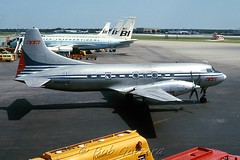
N94205 TTA Trans-Texas Airways
Trans-Texas Airways (TTa) Convair 600 at Dallas Love Field

I had posted previously how in a similar financial situation, New York-based Mohawk Airlines had turned to the services of a small consulting firm called Jet Capital that was headed by a young and quite brash individual named Frank Lorenzo. Lorenzo and his primary business partner, Bob Carney, a fellow Harvard Business School classmate, had become a bit of an upstart darling on Wall Street for their financial wizardry in creating Jet Capital. In their stock offering, Lorenzo and Carney sold shares to the public at 10 cents each, but before the IPO for Jet Capital, they sold shares to friends at $3.50 each but more importantly, they sold shares to each other for 12 cents each. Investing only $44,000 of their money, the Jet Capital IPO netted them $1.5 million yet they controlled 75% of Jet Capital's shares. It was that seed money that Lorenzo used in his failed bid to takeover Mohawk Airlines. At the time of his Mohawk venture, Lorenzo had made friends with Don Burr, a mutual fund manager that had made a name for himself on Wall Street with some very astute aviation stock picks. With his clout as a mutual fund manager that held shares in Texas International, Burr convinced the airline to engage the consulting services of Jet Capital to effect a turnaround. Lorenzo arranged to have the airline's debt refinanced with Burr offering the injection of $5 million from his mutual fund. The result, of course, like their proposed Mohawk deal, was to take control of the airline, and like the Mohawk board several years earlier, the Texas International board was suspicious of Lorenzo and they might have scrapped the deal had it not been for two individuals that entered the ring to try to acquire Texas International themselves- Howard Hughes and Herb Kelleher. 

Ever since Hughes relinquished control of TWA in the late 1960s, he had been craving to get back into the airline business and got that chance with his acquisition of the local service carrier AirWest in 1970, immediately rebranding the airline has Hughes Airwest. But Hughes wanted something on the scope of TWA and his new airline only gave him the West Coast. Acquiring Texas International would get him 2/3 of the way across the country on his goal of recreating a transcontinental airline. For Herb Kelleher, getting Texas International would not only knock out a competitor who only recently tried to put Southwest out of business through legal action, it would also give Southwest the operating certificate of Texas International which permitted flights beyond the states of Texas, something Southwest wasn't able to do at the time. Faced with someone known to be eccentric and someone who they felt was bent on revenge for their failed bid to quash Southwest, the Texas International board sold the airline to Lorenzo in 1972. Like his structuring of Jet Capital, even though he controlled only 24% of the shares in Texas International, Lorenzo structured the deal to give him majority voting control of the airline. At only 32 years of age, Frank Lorenzo became the youngest airline chief since Juan Trippe at Pan Am. And he did it by defeating Herb Kelleher *and* Howard Hughes. Who wouldn't be on top of the world in those shoes?

Frank Lorenzo at the time he took control of Texas International
Don Burr left Wall Street in 1973 to work with Lorenzo in Houston running Texas International. At the time Southwest was adding its fifth and sixth Boeing 737-200 to its nascent fleet and even though Texas International had routes outside of the state of Texas, it was beginning to lose market share within Texas to Herb Kelleher's operation. It was at Texas International that Lorenzo began to earn his reputation as a union-buster- in order to better compete against Southwest, Lorenzo began making deep cuts in labor costs that sowed discord among the employees at Texas International. With labor contracts up for negotiation, the atmosphere became contentious at Texas International. In a pattern that set Lorenzo's pattern for negotiations with both unions and investors, he would often add or change at the last minute agreed-upon terms for the contract. This angered the unions at Texas International and they struck, the very first strike in the history of the small airline. The airline was grounded for four months, but back then in the days before deregulation, there was a mutual aid pact in place where other airlines gave financial support to airlines that were grounded by labor actions. As a result (and much to the other airline's chagrin who felt Lorenzo could have prevented the strike), Texas International got millions under the pact and the strike eventually ended. 
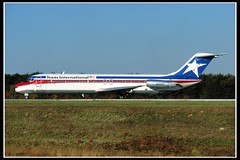
N3508T Texas International Airlines
Texas International Douglas DC-9 Series 30, the airline's largest aircraft

Having got his labor concessions the way he wanted, Lorenzo could now turn his attention to competing with Southwest. At the time, Southwest operated within the "Texas Triangle" of Dallas, Houston, and San Antonio, the state's three largest cities. Kelleher had engaged the services of a seasoned airline executive, Lamar Muse, to guide Southwest's growth. Muse picked the agricultural town of Harlingen in the Rio Grande Valley as Southwest's next destination. The city was ripe for the picking- being at least a seven hour drive from the nearest large city, Harlingen was dependent upon air services from Texas International and the four month strike at the airline had hurt the city economically. Muse had also astutely noted that Harlingen was a short drive from South Padre Island which was at the cusp of starting its tourist boom as a Gulf Coast beach destination. While Texas International would have charged a one way fare of $40 for Harlingen, Southwest charged only $25 and traffic soon boomed with thousands of passengers filling Southwest flights whereas the year prior, Texas International would have only had a few hundred a month. Before long, residents from northern Mexico were crossing the border to also take Southwest flights. Texas International tried various approaches, but it was painfully clear to Lorenzo that he wasn't able to compete head-to-head with Southwest. 

In the days before deregulation, airline fares were set by the Civil Aeronautics Board (CAB) in Washington. Any airline that operated beyond a single state was an interstate carrier and would fall under CAB regulation as was the case with Texas International. Southwest, however, only operated in Texas and therefore was free to set its fares whatever it wished as long as the state authorities in Austin had no objections, which was rarely the case. In November 1976, Lorenzo petitioned the CAB to be allowed to cut its fares- and not just to match Southwest, but to undercut Southwest with a 50% discount- what Lorenzo called "Peanuts Fares" since you could "fly for peanuts". For years airlines had been allowed to implement fare discounts by the CAB, but these were usually for charter flights, holiday flights and red-eye flights and were rarely ever long-term and only applied to a few flights. What Lorenzo was petitioning the CAB to be allowed to do was unprecedented in the airline industry- he was asking for individual authority to set his own ticket prices across the board based on market conditions. This had never been done in forty years, but there were already deregulation forces at work in Washington on the heels of Jimmy Carter's election to the White House. The CAB approved Lorenzo's petition and the Peanuts Fare" were introduced not just to Harlingen, but across Texas International's route system. By the end of the first week, passenger loads on the airline had shot up an astounding 600 percent. 

Peanuts Fares didn't just apply to routes where TI competed with Southwest
Peanuts Fares were a success for the airline and Frank Lorenzo was hailed as a hero by consumer advocate groups. But there was a catch that gnawed at him despite being flush with success at such a young age with such a small airline- the fare experiment suggested strongly that airlines were more than able to manage their own fares without the bureaucracy of the CAB. To the advocates of deregulation, it was ammunition in the battle to eliminate the CAB and deregulate the US airline industry. Just a few years earlier an airline executive could face criminal charges for setting fares without the approval of the CAB, now here was Texas International doing just that and making a huge pile of money in the process and stimulating a boom in passenger traffic. Lorenzo didn't want deregulation, though. Texas International at the time was only the 20th largest airline in the United States. He knew he could be crushed instantly by the Dallas-based giant Braniff International should deregulation happen. Even bigger American Airlines was growing its presence at the new DFW Airport as well, and American had resources and deep pockets that would make Texas International a quick snack in a fully free-market environment. During press interviews at the time, Lorenzo was quick to point out the experimental and temporary nature of the Peanuts Fares. For the time being, the CAB's bureaucracy did shelter him from being crushed by larger airlines for the time being, giving him time to plan his next move. 

But that'll be a blog post for a later date..........

Source: Hard Landing: The Epic Contest for Power and Profits That Plunged the Airlines into Chaos by Thomas Petzinger. Times Business/Random House, 1996, pp 38-50. Grounded: Frank Lorenzo and the Destruction of Eastern Airlines by Aaron Bernstein. Beard Books, 1999, pp 11-15 Photos: Wikipedia, Flickr/Bob Garrard Collection


03 March 2015

David Neeleman's First Venture in the Airline Business

David Neeleman, founder of JetBlue
Three years after the passage of the Airline Deregulation Act in 1979, the US airline industry was in the midst of upheaval as many of the legacy carriers that long dominated the commercial skies since the second decade of the century were under siege from free market forces. Unshackled from the strict regulation of the Civil Aeronautics Board, airlines now had a free hand to adapt and adjust to the demands of the US travel market. Now you would think this would be a great thing, but a lot of the majors weren't adapting. And their attempts to adjust to the market were under attack from a new legion of airlines that hadn't been seen in the US market before- the start up. 

National Airlines found itself swallowed up by a now-bloated Pan Am in an effort to build an instant domestic network for what was once America's "Chosen Instrument". Eastern Airlines found itself under attack by a brash low-cost upstart called PeoplExpress. American began to build the first "fortress hub" in the industry at its new base at Dallas/Fort Worth. Western and United found themselves under attack by PSA's breakout of the intrastate market in California. Labor strife reigned at Texas International and a resurgent Air Florida found its operation cast into doubt after a tragic crash in a blizzard at Washington National Airport. And most telling of what the next several years would bring, Braniff International Airways shut down for good that same year, a victim of over-expansion and bad business decisions reaching back into the 1970s. An airline with a storied history and legacy going back to the 1920s simply shut down to the shock of the industry.

It was amidst this chaotic marketplace that a bored and poorly performing college student in accounting at the University of Utah sensed opportunity. In 1982 David Neeleman had been reading pieces in the Wall Street Journal regarding Braniff's shutdown as the first convulsion to wrack the incumbent airlines in a newly deregulated market. Long an under performer in school (thanks to what we now know today as attention-deficit disorder), Neeleman did have a gift for numbers and customer service groomed from his earliest years working for his grandfather in a small Salt Lake City market. With a shift in the airline marketplace, Neeleman found there were opportunities for smaller carriers like Southwest and Midway Airlines who as smaller entities, were nimble to adjust to marketplace and could operate tightly-knit employees for lower costs. He approached his father, Gary Neeleman, telling him "Dad, I think we should get into the airline business." To which the elder Neeleman responded "How on Earth do you think we could do that? Airplanes cost money!"

Neeleman pointed out that his father was absolutely right- to start an airline is a insanely capital-intensive venture. What Neeleman proposed to his father was to get into the airline business via the back door through the package tour business. Arranging packaged tours was far less capital intensive as the various parts of the package, from airfare, hotel, and so on, were already out there, they only had to be combined in a single package to make it easy for the consumer to travel to exotic locales for vacation with the least amount of hassle possible. In the days before internet booking, package tours were usually the most convenient way for the average American to jet away for a few days or more. 

Developing his business plan and arranging for investors, Neeleman found out from a college classmate that she know someone who bought four hotels in Hawaii and converted them into condominiums. However, with a recession taking place, the owner found it difficult to sell the units- Neeleman saw an opportunity- he could rent out the condos for customers wanting a quick escape. He literally cold-called the owner with a sales pitch: pay me your maintenance fee, $100 per empty unit per week, and I'll fill them all up with vacationers. He would mark up the price for renting them and collect the difference. Neeleman then placed an ad in the Salt Lake City papers that brazenly pitched "$50 a night for your own condo in Hawaii!"

The response was amazing, the condos were getting filled and David Neeleman was getting $250 a week off each rental he set up. Making $1000 a day, school got very uninteresting, very quickly, so he dropped out during his junior year at the University of Utah to run his business full time. Although his condo rental business was booming, there was one problem that always nagged at him- his customers always had a difficult time getting good airfares out of Salt Lake City to Honolulu via the various Pacific gateways of the established majors. Figuring he could do better buying blocks of seats on charter or budget airlines, he set out see which airline could best meet the needs of his customers for an inexpensive flight to Hawaii. The cheapest he could find? 

One of The Hawaii Express's two Douglas DC-10s.
Enter The Hawaii Express. They were a small charter that flew only 2 DC-10s (and at one time a single 747) out of LAX to Honolulu. The Hawaii Express was founded and run by a Hawaii-based businessman, Michael Hartley. Hartley had his start in the airline business going back to 1975 when he started an intrastate commuter airline in Hawaii, Island Pacific Airlines. Island Pacific operated a small fleet of Cessna 402s out of Honolulu and in 1978, his airline was acquired by fellow commuter rival Air Hawaii. During the same period, Hartley and his wife also ran a large FBO operation at HNL. In 1981 he seized upon the opportunity brought about by deregulation start The Hawaii Express to offer cheap fares between Honolulu and Los Angeles. 

Travel poster for The Hawaii Express
Neeleman now had a cheap condo in Hawaii and a cheap airfare to Hawaii for his customers and he formed a travel company called Independent Flight Services to handle the booking arrangements with The Hawaii Express (or "Big Pineapple" as it was billed in its ads). All his customers had to do was find a way to Los Angeles from Salt Lake and the overwhelming number of them would make the long drive to LAX since Neeleman's package was so inexpensive. In less than a year, he was doing eight million dollars in sales and had 20 employees. He upgraded from his modest family car (he had two children at that point) to a BMW sedan. Each flight had a sizeable block of seats set aside just for Neeleman's customers.

In 1983, barely over a year after he began, it all unravelled with little warning. United Airlines and Western Airlines both had the lion's share of passenger traffic between California and Hawaii for quite some time and both took a very dim view of Michael Hartley's low-fare interloper that was skimming increasing amounts of traffic from their flights. A vicious price war ensued and a dissident board ended up sacking Michael Hartley for failing to respond aggressively and wisely to the onslaught by United and Western. In less than eight months, The Hawaii Express shut down in bankruptcy and with the airline went hundreds of thousands of dollars of deposits Neeleman's company put down for seats on each flight. He had no money left to refund his customers' deposits and he in turn had to declare bankruptcy. 

In the book Blue Streak Neeleman states "And I had a hundred thousand dollars in the bank and no debts and if I only had several thousand dollars more, I could have saved the company." Neeleman was also on the verge of signing on with a different charter airline fly direct from Salt Lake City to Honolulu. The need for a large cash cushion definitely made a powerful impression on the 24-year old David Neeleman. Overnight, the Neelemans lost everything. Home, assets, car. He went back to working as a cashier in his grandfather's small store, stocking shelves at night- the very job he held before going to college. He resolved to never go back to the airline business again. David's father, however, saw that his son was probably meant to do more and introduced him to a family friend, June Morris. She owned the largest travel agency in Utah. She made him a deal- work for me for six months, if you don't like it, no hard feelings. 

The rest, is history. With June Morris he ended up founding Morris Air (which ironically had Salt Lake City-Los Angeles as its busiest route) and when Morris Air was bought by Southwest in 1993, Neeleman ended up working with the one man who he admired immensely- Herb Kelleher. After leaving Southwest amidst a personally conflict with everyone at Southwest except Herb, Neeleman went on to found Westjet in 1996 and you know where he ended in 2001- launching JetBlue. After JetBlue, he headed to Brazil to found Azul Brazilian Airlines in 2008.

Neeleman's experience with The Hawaii Express was formative, though. He vowed to never be undercapitalized again (when he launched JetBlue, it had amassed an industry-leading over $100 million in capital before even leaving the ground). He learned that the deregulated marketplace, while it favored start up carriers, also gave the legacy carriers the ability to respond aggressively. Michael Hartley established ticket consolidator Cheaptickets.com. June Morris still sits on the board of Southwest Airlines. JetBlue has definitely made a mark on the industry. And it all began with some empty Hawaii condos and a little known charter airline.

Source: Blue Streak: Inside JetBlue, the Upstart That Rocked an Industry by Barbara Peterson. Portfolio Publishing, 2004. Photos: Wikipedia, Frank Duarte/Airliners.net.

03 May 2010

How the Spirit of Pacific Southwest Airlines Lives on at Southwest


When Herb Kelleher and Rollin King sketched out their idea for Southwest Airlines on a cocktail napkin, they both knew they were facing tremendous odds against the large airlines that operated in Texas already like Braniff, American, and Texas International. One of their weaknesses was a lack of airline experience which they solved by bringing aboard veteran industry executive Lamar Muse who started out in 1948 at Trans-Texas and worked at American, Continental, Southern, among others and most notably was president of Fort Worth-based Central Airlines before it was bought up by Frontier in 1967.

With the nascent Southwest still fighting legal battles to win the rights to start service in Dallas, Rollin King and Lamar Muse visited Pacific Southwest Airlines' San Diego headquarters in 1969 to meet with the president of PSA, J. Floyd Andrews and the airline's management. King and Muse put it to Andrews bluntly- PSA was a successful intrastate airline for 20 years and they felt that they had an analogous situation in Texas as PSA did in California- large cities separated by a distance that could make for a profitable airline flight. They needed PSA's help in learning the tricks of the trade to become a successful intrastate carrier against the stiff competition of the incumbents, much as PSA managed to carve out a niche in California against United and Western.

Andrews was flattered by Lamar Muse and Rollin King's request and asked his management to cooperate with Southwest completely and not hold back on any of the tricks PSA learned to become successful with a loyal customer base. Between court hearings to get Southwest airborne, Herb Kelleher himself made several trips to San Diego to examine the operations of PSA.

PSA's management was so enamored with the ambitious Texans that they even sold them pilot uniforms, transition training on the Boeing 737 (when it became clear that the 737-200 would be Southwest's aircraft) along with training for the customer service personnel for Southwest. Flight attendant training was observed, inflight practices and procedures were shared, and even station operations were explained to the nascent Southwest operation. Even the financing and marketing departments of PSA welcomed Southwest's personnel for training sessions. The training sessions for Southwest's personnel began in 1970 and Andrews even let Southwest's representatives fly the jumpseat to observe PSA flights. They would carry notebooks in which they noted everything the pilots and cabin crew did that was unique, from funny announcements to inflight contests. Southwest's first marketing people sat in PSA boarding lounges throughout California observing the service levels and the humor PSA's gate agents used on a regular basis.

The head of PSA's computer reservations department even spent time in Dallas helping Southwest get its own system up and running! Andrews even had all of PSA's training and service manuals reprinted for Southwest to use in its early days, removing "Pacific" from "Pacific Southwest Airlines" and substituting "Texas" for "California".

When Southwest inaugurated its first flight on 18 June 1971 from Dallas Love Field, they started out with 22 years of airline operations thanks to the tutelage and generosity of the everyone at PSA. Even though PSA disappeared into history in 1986 when it was bought by USAir, much of what made PSA successful in its first quarter century lives on today at Southwest Airlines.


Source: Poor Sailors' Airline: The Story of Kenny Friedkin's Pacific Southwest Airlines by Gary Kissel. Palawdr Press, 2002, p171-172.

29 April 2010

The ever-unorthodox Herb Kelleher
(Southwest Airlines)
In 1986, Southwest Airlines was only the 14th largest airline in the United States and had only 63 aircraft in its fleet. In fact, in terms of passengers carried, Southwest was less than one-tenth the size of United Airlines. But from the passage of the Airline Deregulation Act in 1978, Southwest had not only grown four-fold but had remained consistently profitable during the rocky early years of deregulation. But few Americans at the time had heart of Southwest Airlines as it was still for the most part operating in Texas and the adjacent states. Despite its relative obscurity, though, the business world from academia to other industries took a close look at Southwest trying to divine the secret to its success. Perhaps Robert Crandall, the iconic head of American Airlines, Southwest's main competition in the Dallas/Fort Worth market, said it best when he said "That place runs on Herb Kelleher's bullshit."

The compromise that left Southwest at Dallas Love Field, the Wright Amendment, only applied to Southwest's services from Dallas and limited those services to the adjacent states of New Mexico, Oklahoma, Arkansas, and Louisiana. But there were no such restrictions on Southwest's other services from other cities in its network and when Kelleher ended up running Southwest full time in 1981, he was ready to break out and head west as well as east.

The only problem was that in the wake of the 1981 PATCO strike, the lack of replacement air traffic controllers led to the imposition of slot controls at the major airports in California that Kelleher wanted to start serving. Until staffing levels were restored, traffic would be restricted at these key airports but that a certain portion of the slots created were to be assigned to new entrants. Kelleher's legal background helped him as he read up on the minutiae of the slot assignment rules. Since Southwest had been operating since 1971, it was hardly a new entrant, but the airline did have a subsidiary set up called Midway Southwest that dated back to the airline's earlier days. Midway Southwest was originally set up to start services to Chicago Midway, but the plans back in the airline's nascent days never got off the ground.

So Kelleher applied for the new entrant slots as Midway Southwest, to his surprise got them from the FAA, and then traded them to Southwest Airlines. Someone higher up in the FAA figured out Kelleher's ruse and struck down the slot award- slots, said the FAA, could only be traded by operating airlines. Ever resourceful and not taking no for an answer, Kelleher then sold Midway Southwest to a charter company that owned a single Learjet. The charter company then traded the slots to Southwest and since the rules as written by the FAA for new entrant slot awards didn't specify charter vs. scheduled let alone a minimum fleet size, the FAA was unable to nullify the slot award a second time. Southwest got its slots to Los Angeles International Airport and prepared to inaugurate services to LAX via Phoenix, Arizona.

All was good and well until the FAA Administrator, J. Lynn Helms found out about Kelleher's legal maneuverings to get access to LAX. Helms summoned him to Washington immediately to explain himself. Helms berated Kelleher for making a mockery of the system by using loopholes in the rules to gain slots to LAX. After his tirade, Helms smiled and confessed that he enjoyed Kelleher's legal maneuvers to win the slots. The story as it's been told is that Helms then ordered Kelleher to leave his office and act as if he'd had his heart ripped out.

So along with services to California, Southwest added Las Vegas, Kansas City, and St. Louis (all now key cities in Southwest's network) and in 1985 the airline opened its services east of the Mississippi River to Chicago Midway. And the rest, they say, is history!

Source: Hard Landing: The Epic Contest for Power and Profits That Plunged the Airlines into Chaos by Thomas Petzinger, Jr. Three Rivers Press, 1996, p320-321.