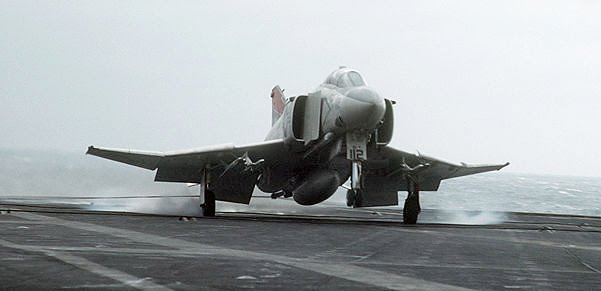
31 March 2010

The Rise and Fall of Air Florida under Ed Acker


Aviation history is often a study in technology as well as events but sometimes the really fascinating parts concern the personalities and how personal traits shaped major decisions that impacted the course of history. One of the those personalities was C. Edward Acker, one of the airline industry's CEOs during the chaotic deregulation period in the United States in the 1980s. If there was one quote that summed up the titanic personality of this Texan, it was something he himself once said: "Once you get hooked on the airline business, it's worse than dope."

But to really understand what Ed Acker did to airlines, you have to go back before deregulation to the state of Florida. After twenty-some years of running various businesses ranging from a candy company to a roofing business, Miami businessman Eli Timoner decided in 1972 to start an airline called Air Florida with some second-hand Lockheed Electras. But Timoner himself admitted that his only airline experience was that of "being a frequent flier". But he had seen the rise of Pacific Southwest Airlines as an intrastate carrier in California and probably was aware of the beginnings of Southwest Airlines in Texas. By being in intrastate carrier, he wouldn't have to deal with the Civil Aeronautics Board which in the days before deregulation controlled all aspects of the industry from routes to fares and even to some degree, aircraft acquisition. Timoner felt that the time was right for Florida to have its own intrastate carrier.

But as a Miami newspaper reporter once put it, Timoner was "long on ambition and short on experience". In its first seven years of operation Air Florida scratched out a small niche for itself in the Florida market, but it was hard going and in 1977 the small airline lost $2 million and Timoner pondered whether it was worth continuing.

Back in 1975, a federal investigation was underway at Braniff International that accused officials of the Dallas-based airline of illegally distributing over $1 million in airline tickets to travel agents throughout Latin America, Braniff's traditional international stronghold. Some of the proceeds made their way into Richard Nixon's 1972 presidential campaign and with Watergate still bringing federal scrutiny in every back room and corner of the corridors of power, Ed Acker, the Braniff president and Harding Lawrence, the Braniff chairman, were the two highest ranking Braniff officials named in the settlement with the CAB that resulted in a $300,000 fine against the airline. Acker stepped down but he wasn't going to stay out of the business for long. That was when he found out Eli Timoner and Air Florida needed help.

Using his Dallas business contacts to bring new capital investment into Air Florida, Acker became Air Florida's new president by purchasing controlling interest in the airline for only $1.5 million in July 1977 with Eli Timoner becoming its chairman. At the time Acker came to Air Florida, the shoestring operation flew only three Lockheed Electras. Acker immediately began to pick up jet aircraft second hand all over North America to replace the Electras, first with DC-9 Series 10s, then Boeing 737-100s and 737-200s. Acker had the airline's colors revamped from orange and blue to blue and green. Inflight service was overhauled and ever the marketing wonk, Acker introduced orange juice with champagne called "Sunshine Sparklers" on Air Florida flights. Certain passengers could fly for free on new routes by getting a "Sunshine Kiss" by kissing a designated "Kiss Miss"- an attractive airline employee at the gate. Southwest's style of pricing discounts was introduced with deep price cuts for flying during off-peak hours. Within the first year, passenger numbers doubled. And they kept on growing.

And then came deregulation. Air Florida was no longer constrained to just serving the state of Florida. Acker carried an OAG in his pocket that was dog-eared and well-worn and he'd thumb through it thinking of new cities to connect. Any city that got a service cut back inevitably got Air Florida service. When Pan Am acquired National, Pan Am got National's route authority between Miami and London and Acker got DC-10s to compete with Pan Am to London. First class seats were covered in sheepskin and free limo service in a Rolls-Royce was available in London. No promotion, no level of service escaped Acker's attention.

Soon the press was lauding praise on C. Edward Acker as one of the darlings of deregulation and he got what in retrospect was an ill-conceived reputation as a "turnaround king" for what he was doing with Air Florida. In 1981, two years after the acquisition of National Airlines, Pan Am was still bungling the merger and had to drastically cut back its services between New York and Florida that had been one of National's traditional trademark services. Practically overnight Acker threw half of Air Florida's fleet into that market and snapped up even Boeing 727s to augment the rapid expansion. Only Eastern at the time had a larger market share than Air Florida in 1981.

And all of it was ballooning Air Florida's debt.

Not one mention in Wall Street or amongst industry analysts was made that Air Florida's debt was growing at a time when interest rates were high and the company's bottom line was actually being subsidized by Acker's financial dealings on the foreign currency market as well as the stock market. No, the meteoric rise of Air Florida won it and Acker praise in the financial press- Acker's a genius! Acker and Air Florida are corporate success stories!

In August of 1981, Acker was in New York City to speak to a group of industry analysts for several Wall Street brokerage firms. Expecting an in-depth analysis of Air Florida's operation and finances, Acker rose to the podium and told all of them that he wasn't able to discuss the financial affairs of Air Florida with them. "I talked to Cunard Lines and told them I was interested in a job as captain of the Titanic. They informed me that I was too late. Not having that challenge available, I decided to try to find one comparable to that. And so I am accepting the chairmanship of a company called Pan American World Airways."

With that, he turned over the podium to Eli Timoner and left. On 1 September 1981 he took over from William T. Sewell at Pan Am. One of Acker's first acts as head of Pan Am was to re-institute all of the flight cutbacks Sewell had made on the New York-Florida market- the very same market he threw Air Florida into with gusto. Eli Timoner now found the airline he started saddled with a massive debt and facing a reinvigorated Pan Am juggernaut determined to drive Air Florida out of business.

And then, one snowy January afternoon in 1982, a tower controller at Washington National cleared an Air Florida flight: "Palm 90, taxi into position and hold. Be ready for an immediate. No delay on departure, if you will."

Within days of the Air Florida crash in the icy Potomac River, approximately 100,000 reservations on Air Florida were canceled. Weeks later, Eli Timoner suffered a stroke and Donald Lloyd Jones from American Airlines was brought in. Jones was edged out at American by Robert Crandall to run American. But it was too late for Jones to save the airline. Acker's foreign currency trading was no longer boosting Air Florida's bottom line. Acker's marketing engine was sucking passengers from Air Florida to Pan Am in droves. Within several weeks $14 million in profit evaporated and creditors moved into seize the airline's assets. The airline even got slapped with an IRS tax lien. That year, Air Florida suffered a $78 million loss. Two years of massive downsizing stripped Air Florida to the bone.

On 3 July 1984, an airline that went in five years from an intrastate carrier with three airplanes to one that spanned the eastern United States, Europe, and the Caribbean declared bankruptcy and abruptly grounded all of its aircraft and sent all of its employees home. Thousands of passengers were stranded on the Independence Day holiday weekend. After weeks of deliberations in bankruptcy court, Air Florida failed to come up with a restructuring plan as it lacked flexibility as most of its assets were already encumbered with debt and all it had left that were worth anything were its routes to Europe and its slots at New York La Guardia and Washington National. The airline reached out Midway Airlines for a rescue plan that involved financing with the eventual acquisition of the airline by Midway, but the deadlines set by the bankruptcy court could not be met and Air Florida faded into the history books of aviation enthusiasts.

And Ed Acker? What happened at Pan Am will be story for another day!

Source: Hard Landing: The Epic Contest for Power and Profits That Plunged the Airlines into Chaos by Thomas Petzinger, Jr. Three Rivers Press, 1996, p201-208.

30 March 2010

The Legend of Half Moon Bay


It's a travel nightmare. Weather delays and closures at airports during peak travel seasons. It was no different in the past than it is now with air travel when we're at the mercy of the weather despite the advances in technology since the end of the Second World War ushered in unprecedented growth in air travel. Picture in your mind it's the start of the 1962 Christmas holiday travel season and one of the primary airports on the US West Coast, San Francisco, is socked in with fog so thick that anything more than ball toss away fades into the murk. Fog at San Francisco International is nothing new, but this particular week in 1962 the fog stubbornly persisted throughout the holiday season. Flights were delayed or canceled and passengers were stranded at San Francisco International Airport. Unless, of course, you're booked on Pacific Southwest Airlines, PSA.

Several hours before San Francisco International became fog-bound, the PSA station manager called every airport in the Bay Area that could handle PSA's Lockheed L-188 Electra turboprops. Half Moon Bay Airport has long enough runways and sitting on the other side of the coastal ridge from the Bay Area, has clear weather. And fortuitously for PSA, Half Moon Bay's runways aren't thick enough to handle the big jets operated by the other airlines at San Francisco International. PSA employees were dispatched to Half Moon Bay to direct ground and station operations while a fleet of 32 buses are chartered to run a continuous shuttle between Half Moon Bay and San Francisco International.

As the tarmac at Half Moon Bay wasn't strong enough for the Electra, PSA's pilots turned just barely off the runway with only two engines on one side running while passengers disembarked to waiting buses to take them to San Francisco. Meanwhile new busloads of passengers from San Francisco queued up away from the disembarking passengers to begin boarding. Since Half Moon Bay didn't have a control tower, another PSA pilot with a radio was stationed on the roof of what became a makeshift terminal building using the company radio frequency to keep arriving and departing Electras apart.

San Mateo Country sheriff's deputies were called in to keep the curious clear of the flight operations and to direct the traffic as many ticketed PSA passengers began to show up at Half Moon Bay Airport itself. PSA ran radio commercials throughout the Bay Area that said "PSA will get you home for Christmas" as the Electra flights shuttled back and forth to the clear skies of Southern California. Some PSA employees would work 36 hour shifts and a small hotel was used for flight crews that timed out on their duty hours.

The unique Half Moon Bay Airport operation ran from 14 December 1962 all the way through Christmas, carrying over 40,000 passengers on 488 flights to Burbank, Los Angeles and San Diego. It was then that the aviation "Legend of Half Moon Bay" was born as PSA was inundated for weeks after the holidays with letters of thanks from passengers.

It's one of my favorite airline history stories and I count myself lucky to have been able to fly PSA before they were absorbed with great sorrow into USAir.

Source: Poor Sailors' Airline: The Story of Kenny Friedkin's Pacific Southwest Airlines by Gary Kissel. Palawdr Press, 2002, p97-100.

29 March 2010


The legendary Russian rocket designer Sergei Korolev and his special design bureau (designated OKB-1) were given responsibility in the early 1950s to develop a practical tactical ballistic missile designated the R-11 that would better be known by its NATO code name, SS-1 "Scud". The first Scud-A/R-11 missiles were accepted for operational use by the Soviet Army in July 1955 but the early versions were cumbersome to set up and fire, requiring multiple vehicles for support and despite advances in technology was little more practical than the German V-2 rocket. As a result, few operational batteries of the early versions of the Scud-A/R-11 missiles were fielded in the 1950s.

Subsequent developments of the early Scud-A/R-11 missile led to the development of the Scud-B/R-17 which featured a whole host of improvements in design and use. A new tracked TEL (transporter-erector-launcher) vehicle simplified operational deployment and advances in construction and propulsion extended the Scud-B/R-17's range over the Scud-A/R-11 missile. In addition, the Scud-B/R-17 was nuclear-tipped along with the options for conventional or chemical warheads. Soviet Army formations that fielded the nuclear-tipped versions of the Scud-B/R-17 usually had one chemical warhead for every 25 nuclear warheads. To simplify the ballistics and guidance, each of the possible warhead options for the missile was standardized at 1 metric ton. The first Scud-B/R-17 missiles become operational in 1962.

Despite the improvements from the Scud-A/R-11 to the Scud-B/R-17, the missile remained relatively inaccurate which was more problematic when using a conventional or chemical warhead which required more precise targeting than a nuclear warhead. The Scud-A/R-11 had a CEP (circular error probable- a circle in which the warhead was expected to land 50% of the time) of 4 kilometers. The first Scud-B/R-17s cut the CEP down to 2 kilometers, eventually attaining a 1 kilometer CEP. But with a conventional warhead, a 1-km CEP was nearly unacceptable. With a move in the 1960s by both the United States and the Soviet Union towards a more "flexible" response in a nuclear crisis, the Soviet military leadership saw that there would be times that a non-nuclear/non-chemical Scud missile warhead would be more desirable to use.

In 1967 the Central Scientific Research Institute for Automation and Hydraulics in Moscow was tasked to develop a top-secret precision-guided version of the Scud-B/R-17. It was originally designated R-17VTO Aerofon and the Institute decided upon a very prescient form of guidance, optical comparison in which the missile would hit its target by comparing an image of the target with an image stored in its memory. In the late-1960s the development of the guidance proved impractical and the Aerofon project was reorganized in 1974 to take advantage of advances in digital computing. The new system relied on digital images and a computer library could be kept of possible targets. The first Aerofon optical guidance prototype was completed in 1975 and successfully tested pod-mounted under a Sukhoi Su-17 strike fighter.

In the United States we had a similar guidance system under development called "digital scene matching area correlation" (DSMAC). The idea in the US system was that DSMAC would be used on cruise missiles on the final run-in on the target after using TERCOM (terrain contour-matching) on the flight into the target vicinity. It's likely that the first Aerofon guidance package was similar to the first analog version of DSMAC tested here in the United States- a stored photographic negative of the target was compared with a photograph taken of the target area. It was a cumbersome system as tested with DSMAC and the first tests were performed with a Tomahawk cruise missile in 1978.

The Aerofon optical guidance system was air-tested in 1975 and flight tested on an actual Scud-B/R-17 missile in late 1979, the Aerofon hitting only a few meters from the designated target. This represented a massive leap in improvement over the 1-km CEP of the Scud-B/R-17 standard missile. The planned operational Aerofon would have had a CEP on the order of 20 meters.

Unlike the other variants of the Scud missile family where the whole missile impacted the target, the Aerofon variant had a warhead section that separated from the main body of the missile (the first Aerofon missiles, though, did not have a detachable warhead section). At the base of this warhead section were lattice-section steering vanes that folded out into the air stream, providing maneuvering capability to the Aerofon warhead. In the base of the warhead section was the batteries for the power supply and its associated electronics. The nose section was tipped with an optical seeker that updated the inertial guidance and accessed the onboard computer for optical comparison of the target. In between the guidance section at the nose and the power/steering section at the base was the warhead which took up the majority of the space.

The production version of the Aerofon was ready for deployment by 1989 but it never went into large scale production as it was superseded by two more advanced battlefield ballistic missiles- the OTR-21 Tochka (NATO code name SS-21 "Scarab") and the OTR-23 Oka (NATO code name SS-23 "Spider"). However, in the 1990s, the Aerofon was offered for export to existing customers of the Scud missile.

Source: Scud Ballistic Missile and Launch Systems 1955-2005, New Vanguard #120 by Steven J. Zaloga. Osprey Publishing, 2006, p1-19.

26 March 2010


The need to fit aboard the smaller elevators on the Essex-class fleet carriers and the lack of a folding nose or tail meant that the Grumman S2F (later redesignated S-2) Tracker had a stubby fuselage and a short moment arm which required a relatively large vertical fin to maintain control and directional stability. However, the Tracker was so short-coupled that in a single engine situation, the fin and rudder despite their size were still insufficient and an adverse yaw into a spin would result. At lower airspeeds even with both engines operating the Tracker was a handful during takeoff and approach.

To compensate for this adverse effect, Grumman designed what was called the SERA- Single Engine Rudder Assist. If you look closely at the fin and rudder of the Tracker, the rudder appears to be two vertical sections and a prominent trim tab. During normal flight, only the rearmost section of the rudder and its trim tab acted as a conventional rudder and the section of rudder closest to the fin acted as a rudder trimmer driven by an electric screwjack.

During an engine out, takeoff, or approach, the SERA system was activated and the section that in cruise flight acted as a rudder trimmer switched over to hydraulic activation and acted with the rearmost section of the rudder to act together, effectively doubling the area of the rudder during those critical areas of flight. With the SERA activated, the full two-section rudder traveled an impressive 40 degrees on each side, allowing the S2F Tracker to have a minimum control speed of 85 knots with one engine out.

Another unique feature of the Tracker's tail section was a spring link that connected the retractable tail wheel bumper and the elevator trim. When the Tracker's undercarriage was lowered, there was a pronounced shift in the center of gravity forward as the heavy main undercarriage units swung forward out of the nacelle landing gear bays. To counteract this, when the tail wheel bumper lowered as part of the undercarriage cycle, the spring link automatically provided the needed amount of nose-up trim, lessening the workload of the flight crew on approach to the carrier.

Source: Air Enthusiast, January-February 1996, No. 61. "Willing Tracker: The Grumman S2F Tracker in Canadian Service- Part One" by Robert M. Stitt, p44-45.

25 March 2010


In the 1950s the Armée de l'Air (French Air Force) held a competition for a new jet trainer. The manufacturing firm Morane-Saulnier offered a T-tailed twin jet design that had the student and instructor sitting side-by-side and Fouga offered what became the winning design, a tandem-seat twin jet with a butterfly V-tail which went into production as the Magister. To make the best of the loss, Morane-Saulnier redesigned their aircraft into a four-seat light jet designated the MS.760 Paris which was used by French military as a liason and VIP transport. The Paris was also used by the militaries of Argentina and Brazil.

In 1958 Beechcraft began to market the MS.760 in the United States after the aircraft received its FAA certification. Touring the country and demonstrating it to businessmen as a faster alternative to the piston twins then coming into use in the general aviation, the MS.760 was noted for its ease of maintenance and simplicity of construction. At airshows where the MS.760 was demonstrated, the aircraft would quite literally be disassembled before the crowd, reassembled and flown off again.

For several years Beechcraft tried to gauge customer acceptance of what could be considered the first VLJ design (very light jet). Showing its military origins, a small boarding ladder was stored in the glove box of the cabin that was needed to get into and out of the aircraft. Upon seeing this feature, Walter Beech's widow Olive Ann (who took over the company after her husband's death) is reported to have said that no self-respecting woman would climb into an airplane that way.

Though it's debatable if Olive Ann Beech had anything to do with the eventual demise of the Beechcraft project to market the MS.760, it's quite certain that the arrival of the faster Learjet 23 which made its first flight in 1963 swung the business jet market in Lear's favor. However, in 2009 a long time Paris owner and fan, Edward Furtak, and his company JetSet, acquired the type certificate for the Paris from SOCATA, the successor company to Morane-Saulnier when it changed its name in 1966. Thirty remaining MS.760s were purchased from SOCATA along with the engineering, blueprints, tooling, and even rebuilt Turbomeca turbojet engines. An additional 10 aircraft were purchased from Argentina with the intent of overhauling the airframes and offering them for sale as a VLJ. The intent of the company is to also re-engine the MS.760 with either Pratt & Whitney JT15D or Williams FJ44 engines.

Source: Air & Space Smithsonian, March 2010, Vol. 24, No. 7. "The Last Time We Saw Paris..." from the Soundings column, p12-13.

24 March 2010

The Ault Report: Improving USN Fighter Effectiveness


After the dismal performance of the naval fighter pilots during the Rolling Thunder campaign in Vietnam between 1964 to 1968, the Chief of Naval Operations (CNO), Admiral Thomas Moorer, ordered a wide-ranging and critical review of US Navy air-to-air missile performance during the first half of the war. He put in charge of the study Captain Frank Ault, who served as captain of the aircraft carrier USS Coral Sea in 1966-67. During Ault's command of the Coral Sea, his air wing suffered fifty combat losses, three of them to North Vietnamese MiG fighters and only a single air-to-air victory by the entire air wing. He had made suggestions on improving the performance in particular of the semi-active radar homing AIM-7 Sparrow and in 1968 he was commissioned by the CNO to review the Navy's air-to-air weapons, training and tactics in what is now known as the Ault Report.

The most visible result of Ault's investigation and recommendations was the creation of the Navy's Fighter Weapons School better known as TOPGUN. But Ault's purview also included a review of missile performance as the Navy's F-4 Phantoms had no guns and had rely on missiles for air-to-air kills. In the Ault Report's review of missile performance, the maintenance of the missiles themselves came under scrutiny.

During the conflict in Vietnam, there were numerous occasions where the AIM-7 Sparrow had been fired correctly, but the solid rocket motor failed to ignite and propel the missile to the target or the electronics failed altogether, creating "one expensive unguided rocket". Rather than load "fresh" Sparrow missiles to the underfuselage recesses on the Phantom before each mission, the hard-pressed carrier deck crews often left the delicate missiles on the aircraft for the next mission and it wasn't unusual for a Sparrow missile to sit in its recess on the Phantom for months at a time, flying mission after mission (it was common for an unfired Sparrow missile to fly over 50 missions before it was demounted for maintenance work) and the delicate electronics getting jarred repeatedly by multiple catapult shots and arrested landings. In addition, the tropical moisture and salt air as well as the changes in temperature from the heat of the carrier deck to the freezing cold of the Phantom's cruising altitudes took their toll on the Sparrow missiles.

During the same time period the USAF's standard was to at least demount the missile and bench check the electronics and systems after every ten missions flown. Simple maintenace procedures were found to vastly improve the reliability of the Sparrow missiles. For example, there was a disposable "wafer" switch that allowed an electrical connection between the Sparrow's rocket motor and the Phantom. This switch was designed as a one-time use item to be removed at the end of a mission and replaced with a new switch, but in the interests of saving time and money, Navy Phantom squadrons never changed out the component which caused it to corrode and fail, causing a significant number of the Sparrow missile malfunctions.

While TOPGUN is the most visible result of the Ault Report, his recommendations would wide-ranging implications that not only increased the combat effectiveness of the US Navy's fighter squadrons in Vietnam, but also influenced contractor and logistical support of all of the Navy's aviation assets in years to come.

Source: Gray Ghosts: US Navy and Marine Corps F-4 Phantoms by Peter E. Davies. Schiffer Publishing, 2000, p139-140.

23 March 2010


With the specter of war looming in the Pacific, the Australian government issued a requirement in 1940 for a twin-engine dive bomber that could also perform the role of torpedo bomber to replace the program to build the Bristol Beaufort light bomber in Australia. At the time of the Australian specification, urgent needs in the UK during the Battle of Britain saw many of the needed components being diverted to British defense needs. The specification called for a light bomber to exceed the performance of the Beaufort and by being locally-designed and built by the Commonwealth Aircraft Corporation (CAC), it could be designed from outset to meet the Royal Australian Air Force's needs.

Led by the CAC's chief designer, Lawrence Wackett, the resulting aircraft was initially designated the CA-4 and powered by two Pratt & Whitney R-1830 1,200-horsepower radial engines with a crew of the three. The most unique aspect of the CA-4 design were remotely-controlled twin gun turrets in the aft end of each engine nacelle controlled by the rear gunner. Each turret had twin 0.303 guns and there were an additional four 0.303 guns fixed forward in the nose fired by the pilot. In addition, the underside of each nacelle contained a bomb bay that could carry two 250 lb bombs.

The CA-4 prototype made its first flight in September 1941 and was found to have handling and stability issues. Armament trials the following year with the RAAF showed that the locally-designed sighting system also had numerous technical deficiencies. But the design proved so promising that orders were placed in March 1942 for an improved version of the CA-4 designated CA-11 and named Woomera (a woomera is an elongated bowl-like tool used as a spear throwing device by the Aborigines to extend the arm's moment arm).

The improved CA-11 used elements of the sighting system and turret controls from a Boeing B-29 Superfortress as well as aerodynamic refinements to improve its handling and performance. By the time of the CA-11 Woomera's first flight in July 1944 dive bombing and torpedo bombing were less important as they were when the design was first conceived in 1940. In addition, there were numerous Allied aircraft already in production and easily available that filled many of the roles planned for the Woomera- particularly the Bristol Beaufighter and the North American B-25 Mitchell, for example. Flight tests also showed that while handing was improved, but there were vibrations in the tail section that could lead to structural fatigue. As CAC's engineers were heavily tasked with other projects and there was a shortage of skilled personnel, the CA-11 Woomera was quietly shelved.

Source: Air Enthusiast, January-February 1996, No. 61. "From Fisherman's Bend: The Aircraft of the Commonwealth Aircraft Corporation" by Joe Vella, p27-28.

19 March 2010


On 18 January 2003 the over 7,000 Marines of Task Force Tarawa set sail from the United States aboard seven amphibious assault ships with 72 aircraft (and more following them) for the Persian Gulf in the run up to Operation Iraqi Freedom. The Bell AH-1W Super Cobras of Marine Light Attack Helicopter Squadron 269 (HMLA-269 "Gunrunners") from MCAS New River, North Carolina were reinforced with additional gunships from sister unit HMLA-167 for a total of 18 AH-1W Super Cobras and nine Bell UH-1N transports. The reinforced squadron embarked on the USS Saipan (LHA-2) and the USS Ponce (LPD-15) for the sea transit to the Middle East. As Task Force Tarawa transited through the choke points of Gibraltar and the Suez Canal, HMLA-269 would have six Super Cobras on flying alert to protect the task force.

Arriving off the coast of Kuwait on 18 March 2003, ten of HMLA-269's Super Cobras were detached to a forward base 23 miles south of the Iraqi border to participate in the squadron's first operational mission, the assault on the Iraqi forward reconnaissance positions at Safwan. The first combat missions by the AH-1Ws of the squadron on 20/21 March were notable, however, for the combat use of what was then-a-classified version of the AGM-114 Hellfire missile, the AGM-114N thermobaric Hellfire.

Thermobaric weapons were first developed in the 1960s by the engineers at the China Lake Naval Weapons Center and were what were then known as fuel-air-explosive weapons. FAEs work by releasing a cloud of volatile vapor which is then detonated, creating a large and destructive pressure wave in the process. A standard blast/fragmentation warhead creates a large pressure spike that decays rapidly. A thermobaric warhead, on the other hand, creates a large sustained pressure wave that propagates through any building or enclosed space, making it ideal for urban warfare. In the late 1990s, the engineers at China Lake had succeeded in creating non-liquid thermobaric explosives using metal particles (such as aluminum or magnesium) instead a liquid. The initial detonation releases the fine particles which then ignite, creating the large and sustained pressure wave. For this the China Lake Naval Weapons Center was awarded a classified US patent.

Marine Corps combat experience prior to OIF had shown that missiles like the TOW or Hellfire with their blast/fragmentation warheads were often unsuitable in urban environments as the pressure spike from the warhead detonation would be attenuated inside enclosed spaces. In addition, the missiles would often pass right through the target building before detonating.

The thermobaric weapons work at China Lake resulted in what was called a metal-augmented charge (MAC) that was the ideal warhead for a new version of the Hellfire missile desired by the Marine Corps. The AGM-114N's thermobaric warhead consists of a layer of fine aluminum powder sandwiched between the warhead casing and the explosive fill in the center. On detonation, the aluminum powder is dispersed and ignites, creating a large and sustained pressure wave. Live fire tests at White Sands and China Lake proved the weapon to be effective.

When HMLA-269 arrived in the Persian Gulf, the squadron's commanding officer, Lt. Col. Jeffrey Hewitt, was one of the few Marine aviators aware of the AGM-114N as his previous posting before taking command of the "Gunrunners" was a senior posting in Marine Corps weapons development working closely on the tests of the thermobaric Hellfire missile. The thermobaric Hellfires used in the development and testing work in the United States prior to OIF were converted from stock AGM-114K Hellfires and Lt. Col. Hewitt knew that there were 60 AGM-114Ns left over from the test program that were in storage. Aware that the Marines of Task Force Tarawa faced many urban threats before even reaching Baghdad, he arranged for those 60 missiles to be shipped out to the squadron. However, the US Navy wouldn't transport them as the missiles were never certified for carriage by ship. Lt. Col. Hewitt then turned to the US Air Force, who were more than happy to fly out the missiles immediately to Kuwait for the squadron.

HMLA-269's original plan was to keep the precious AGM-114Ns until Task Force Tarawa reached Baghdad, but they also wanted to prove that the thermobaric Hellfires worked in actual combat. Several were fired during the assault on Safwan and were highly effective. Interestingly enough, during their use in the assault on Safwan and in HMLA-269's combat missions on the march to Baghdad, the AGM-114N thermobaric Hellfire missiles (called TB Hellfire) were still classified!

Source: International Air Power Review, Volume 12, Spring 2004. "Focus Aircraft: Bell AH-1 Cobra" by Robert Hewson, p56-58.

18 March 2010


The CIM-10/IM-99 Bomarc was one of the first very long range surface to air missiles to go into service, becoming operational with NORAD for the air defense of North America in 1959. Housed in a rectangular semi-hardened shelter, on receiving the launch order the shelter's roof would slide open and the Bomarc would be raised into the vertical launch position. An Aerojet General LR59 liquid-fueled booster rocket would accelerate the Bomarc to over Mach 2.5 and 60,000 feet when the twin Marquardt RJ43 ramjets took over to propel the missile to over 200 miles out from launch where its 10-kiloton W40 nuclear warhead would destroy the target bombers.

The booster rocket of the missile used hypergolic fuels- red fuming nitric acid as an oxidant and aniline fuel that would spontaneously ignite when mixed. The fuels were stored on the missile for 90 days at a time. When a launch order was received, a helium tank on the missile would be pressurized to provide propellant tank pressurization for the booster rocket. It would take 15 seconds to pressurize the tank, during which time the Bomarc was raised to the vertical position for launch. At the end of each 90 day period, the missile would have to be defueled, decontaminated and then refueled. Pressurized helium would be used to empty the tanks to defuel them as well as in the refueling procedure.

On 7 June 1960 the firefighting department of Fort Dix and McGuire AFB, New Jersey received an emergency call that a fire had broken out in Bomarc Shelter #204. The missile in that shelter was nuclear tipped and the failure of a helium tank set up a pressure shockwave that ruptured the booster rocket propellant tanks, spilling the hypergolic fuels and starting a fire. The fire then heated the remaining fuel in the missile, causing an explosion. Fortunately the shelter roof doors were closed and took the brunt of the propellant explosion, but the steel roof and blast doors were still blown off the shelter and the fierce fire burned for 45 minutes. The missile and launch equipment were destroyed and the fire was so intense the steel structural beams of the launch shelter sagged from partially melting.

Fortunately the hardened shelter design contained most of the explosion and debris and the adjoining launch shelters were undamaged. Water had to be pumped on the remains of the shelter and missile through the night before it cooled down enough for radiation safety teams from the Atomic Energy Commission and the USAF to survey the damage. As the fire had to burned, the structure of the missile melted and the nuclear warhead fell right into the fire and was itself partially melted. Careful study of the remains of the warhead showed that between 2 to 11 oz of plutonium were lost but the tritium tank that held the heavy hydrogen isotope to trigger the nuclear reaction was intact.

The plutonium caused radiation counts inside the remains of the shelter to soar to 2 million counts per minute as the salvage teams had to wear protective gear. What was left of the floor and shelter were sprayed with a special thick paint that absorbed the radiation (thankfully there was no high energy gamma radiation from detonation of the warhead) and four inches of concrete were poured on the surrounding area until detected radiation counts were zero. The site remained fenced off until the Bomarc missiles were decommissioned in 1972. In 2004 the USAF had the site demolished and had 20 feet of soil surrounding the shelter excavated. The soil and the debris were shipped out to a nuclear waste repository in Utah.

Source: Airpower, September 2004, Volume 34, No. 9. "Nuclear Nightmare Almost" by Dr. Richard V. Porcelli, p13.

17 March 2010

The Very Unique Dornier Do 212


One of the more unique flying boats to be built was the Dornier Do 212 which began its water trials in 1942. Design work on the Do 212 began in 1938 at the Dornier-Werke facility in Freiderichshafen, Germany in collaboration with Dornier's Switzerland-based subsidiary who would be responsible for construction of the prototype with the Swiss registration HB-GOG.

The most unique aspect of the Do 212 was that it had a four-bladed pusher propeller in the tail that could be pivoted upward 12 degrees on takeoff. An extension shaft with a flexible joint connected the propeller to the mid-fuselage mounted piston engine, a 460-horsepower Hirth HM512B 12-cylinder powerplant located immediately behind the four-seat cabin. The monoplane wing had fixed floats on the wingtips that formed endplates which were planned to contribute to directional stability in flight. Initial water trials took place on Lake Constance in Switzerland, the Do 212 being towed behind a boat for the first series of tests. As a result of some stability issues on the water, extensions were added to the bottom of the wingtip float/endplates.

A short hop off the water was made in August 1942 but the pilot had to abort and land immediately due to instability in the air. Technical issues with the extension shaft and getting adequate cooling to the Hirth engine resulted in the program being canceled and the Dornier Do 212 being scrapped before any further flight testing was conducted.

Source: Air Enthusiast, Volume 5, Number 3 (September 1973), "Plane Facts" by William Green, managing editor, Gordon Swanborough, editor. Pilot Press Ltd, 1973, p147. Photo: 1000AircraftPhotos.com